
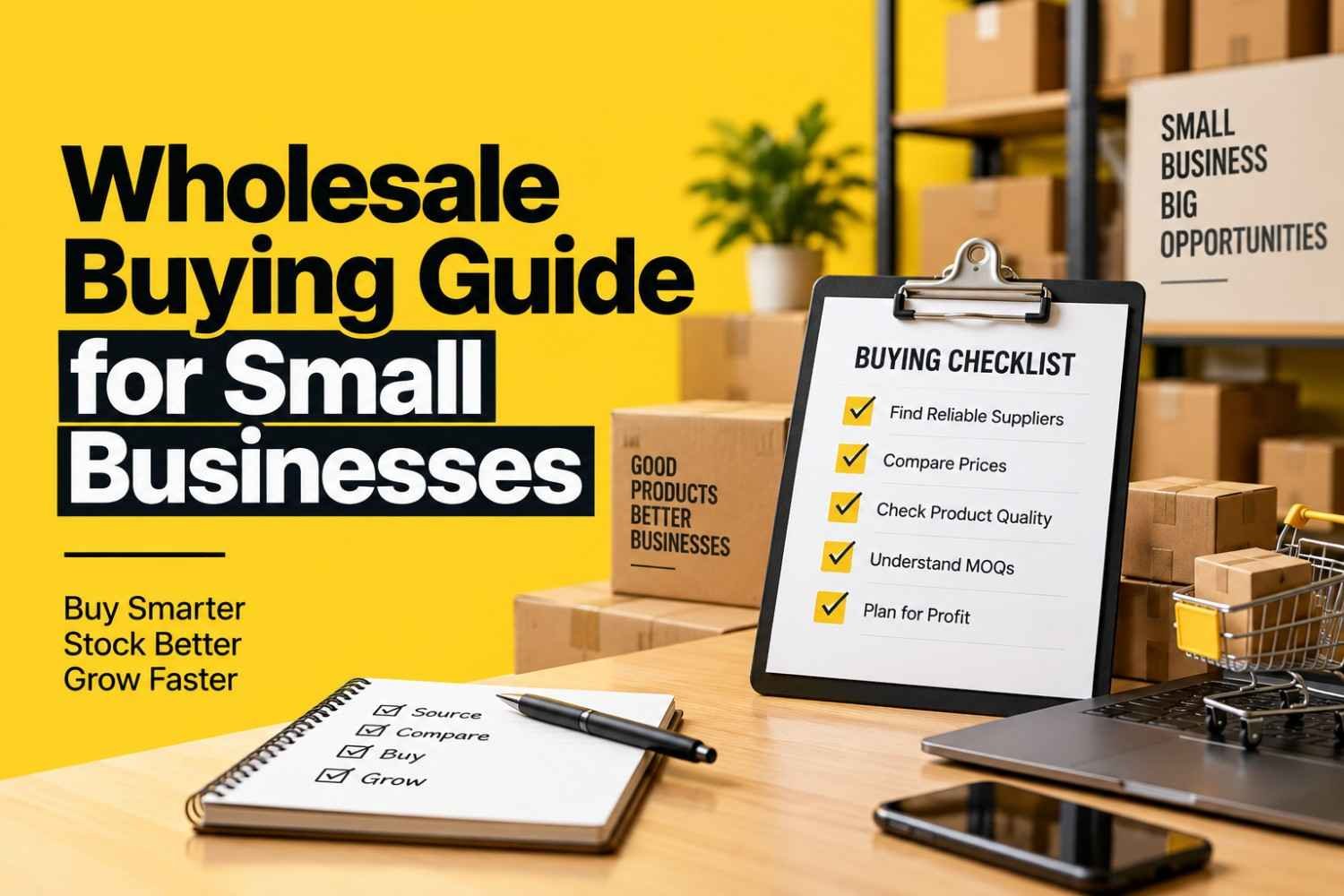
Wholesale buying can improve margins, but purchasing too much inventory or choosing the wrong supplier can quickly tie up cash. Small businesses need a disciplined approach to quantities, costs and supplier selection.
\r\nKnow Your Demand
Use sales history, seasonal trends and realistic forecasts to estimate how much stock you can sell. Avoid buying only to reach a supplier's MOQ if demand is uncertain.
\r\nCompare MOQ and Price Breaks
Ask suppliers for quantity tiers. A slightly higher unit price at a lower MOQ may be financially safer than over-ordering.
\r\nCalculate Landed Cost
Include product cost, packaging, freight, duties, taxes, inspection, payment fees and local delivery. Profitability should be evaluated on landed cost rather than the factory price alone.
\r\nCheck Product Quality
Use samples, written specifications and clear acceptance standards. For repeat orders, track defect rates and supplier consistency.
\r\nNegotiate More Than Price
Payment terms, lead times, packaging, labeling, replacement policy and mixed-SKU quantities can be as important as a small price reduction.
\r\nProtect Cash Flow
Plan reorder points and avoid using all available working capital on one shipment. Balance inventory savings against storage cost and the risk of slow-moving stock.
\r\nConclusion
Successful wholesale purchasing is about buying the right quantity at the right total cost from a supplier you can rely on. Build repeatable purchasing rules and improve them using real sales and supplier-performance data.
Practical Checklist
- Define the exact buyer, supplier or market you are targeting before spending on promotion.
- Keep company details, product specifications, MOQ, lead time and commercial terms consistent across channels.
- Verify counterparties, certifications and transaction-specific requirements before payment or shipment.
- Track qualified inquiries, quotations, conversions and repeat orders instead of measuring visibility alone.
- Review regulations, scheme rules and platform pricing from current official sources whenever they can change.
How to Measure Results
For B2B growth, useful metrics include qualified inquiries, response time, quotation rate, order conversion, average order value, repeat business and customer-acquisition cost. A channel with fewer but more relevant inquiries may be more valuable than one generating a large volume of low-fit contacts.
Frequently Asked Questions
Is online visibility enough to generate B2B orders?
No. Visibility helps discovery, but buyers still evaluate product fit, price, capacity, documentation, communication, delivery capability and commercial risk before placing an order.
Should a business depend on one marketplace?
Usually it is safer to combine multiple channels such as a company website, direct outreach, referrals, exhibitions, buyer-seller meetings and suitable B2B platforms. The right mix depends on the product and target market.
Related topic: wholesale buying guide should be evaluated in the context of the business, target market and current commercial requirements.