
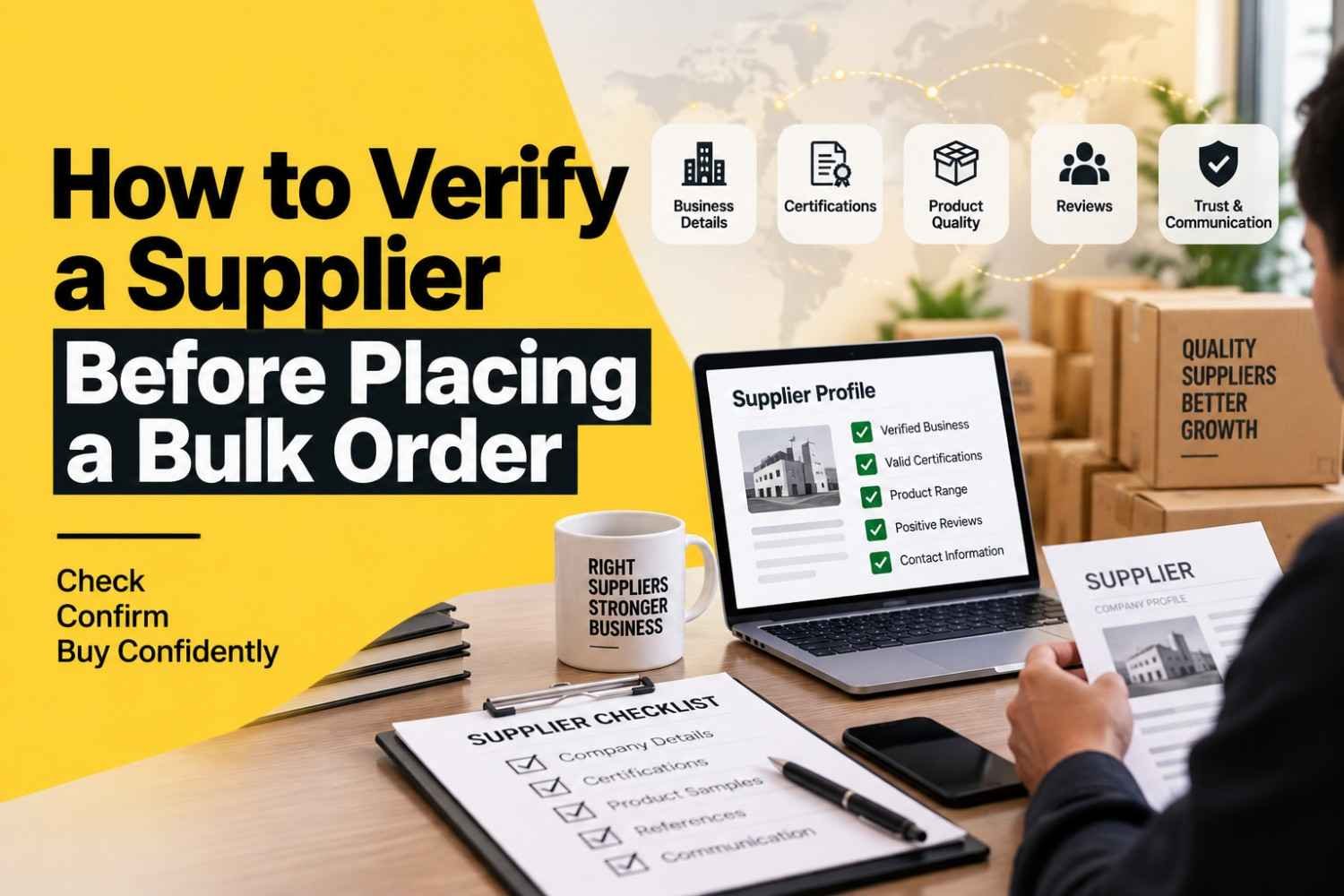
Bulk orders increase the financial and operational impact of supplier mistakes. Before placing a large purchase, buyers should verify the business, product capability and commercial terms in a structured way.
\r\nConfirm Company Information
Check the legal company name, registration details, operating address, website, business email and relevant tax or export information. Inconsistencies should be investigated before payment.
\r\nEvaluate Product Evidence
Request current product photographs, specifications, test reports where relevant and physical samples when practical. Confirm exactly which sample or specification will be used for production.
\r\nReview Certifications Carefully
If a product requires certification, confirm the certificate matches the supplier, product, standard and destination market. Do not treat a generic logo or screenshot as proof.
\r\nDiscuss Production and Quality Control
Ask how incoming materials, in-process production and final goods are checked. For higher-value orders, consider third-party inspection or pre-shipment verification.
\r\nConfirm Commercial Terms
Document MOQ, price, currency, Incoterm, packaging, lead time, payment schedule, warranty, defect handling and dispute process.
\r\nUse a Trial Order When Possible
A smaller first transaction can reveal how the supplier communicates, packs, produces and handles issues before a larger commitment.
\r\nWarning Signs
- Pressure for immediate full payment
- Frequent changes to bank or company details
- Unwillingness to provide basic business information
- Prices far below realistic market levels without explanation
- Inconsistent specifications or documents
Conclusion
Supplier verification is a process, not a single badge. Combine business checks, product validation, written terms and appropriate payment and inspection controls before committing to bulk purchases.
Practical Checklist
- Define the exact buyer, supplier or market you are targeting before spending on promotion.
- Keep company details, product specifications, MOQ, lead time and commercial terms consistent across channels.
- Verify counterparties, certifications and transaction-specific requirements before payment or shipment.
- Track qualified inquiries, quotations, conversions and repeat orders instead of measuring visibility alone.
- Review regulations, scheme rules and platform pricing from current official sources whenever they can change.
How to Measure Results
For B2B growth, useful metrics include qualified inquiries, response time, quotation rate, order conversion, average order value, repeat business and customer-acquisition cost. A channel with fewer but more relevant inquiries may be more valuable than one generating a large volume of low-fit contacts.
Frequently Asked Questions
Is online visibility enough to generate B2B orders?
No. Visibility helps discovery, but buyers still evaluate product fit, price, capacity, documentation, communication, delivery capability and commercial risk before placing an order.
Should a business depend on one marketplace?
Usually it is safer to combine multiple channels such as a company website, direct outreach, referrals, exhibitions, buyer-seller meetings and suitable B2B platforms. The right mix depends on the product and target market.
Related topic: verify supplier before bulk order should be evaluated in the context of the business, target market and current commercial requirements.