
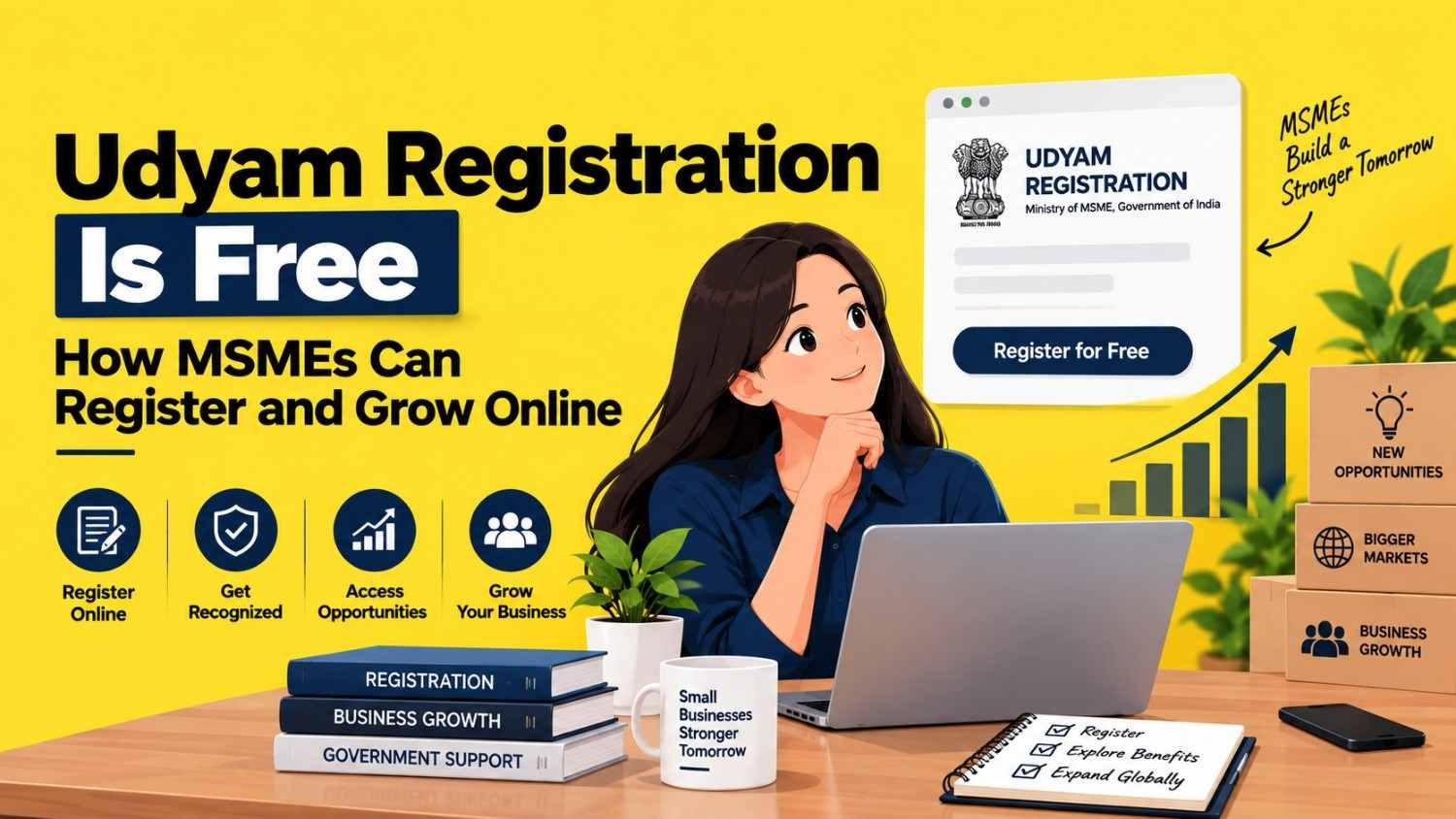
Learn what Udyam Registration is, why official registration is free, and how MSMEs can build stronger digital visibility after registration.
What Is Udyam Registration?
Udyam Registration is the Government of India registration framework for micro, small and medium enterprises. The official Udyam portal states that registration is free, paperless and based on self-declaration. Businesses should use the official government portal and check the latest eligibility and classification rules before applying.
Registration Is Only the Starting Point
A registration can establish an MSME's formal identity, but it does not automatically create customer demand. After completing relevant registrations, a business still needs clear product information, professional images, accurate contact details and a consistent process for responding to buyers.
Build a Searchable Business Profile
Create a profile that explains what you manufacture, supply or export. Add product categories, specifications, minimum order quantities where relevant, service locations and certifications that buyers may need to evaluate.
Turn Digital Visibility Into Inquiries
Use product pages and supplier profiles to answer common buyer questions before they contact you. Clear descriptions can improve discovery and help reduce irrelevant inquiries.
How TradesFolks Fits In
TradesFolks is designed to help businesses present their products and supplier capabilities to B2B buyers. Where TradesFolks currently provides a feature at no charge, sellers can use that feature without buying a separate paid package; always check the platform's current pricing and feature terms.
Important Safety Check
Government schemes, classifications and portal processes can change. Verify current requirements on the relevant official government website and never pay an unofficial intermediary merely because it claims Udyam registration itself requires a government fee.
Conclusion
Formal registration and online visibility solve different problems. Use official registration channels for compliance, then build a strong digital presence so buyers can understand and discover your business.
Practical Checklist
- Define the exact buyer, supplier or market you are targeting before spending on promotion.
- Keep company details, product specifications, MOQ, lead time and commercial terms consistent across channels.
- Verify counterparties, certifications and transaction-specific requirements before payment or shipment.
- Track qualified inquiries, quotations, conversions and repeat orders instead of measuring visibility alone.
- Review regulations, scheme rules and platform pricing from current official sources whenever they can change.
How to Measure Results
For B2B growth, useful metrics include qualified inquiries, response time, quotation rate, order conversion, average order value, repeat business and customer-acquisition cost. A channel with fewer but more relevant inquiries may be more valuable than one generating a large volume of low-fit contacts.
Frequently Asked Questions
Is online visibility enough to generate B2B orders?
No. Visibility helps discovery, but buyers still evaluate product fit, price, capacity, documentation, communication, delivery capability and commercial risk before placing an order.
Should a business depend on one marketplace?
Usually it is safer to combine multiple channels such as a company website, direct outreach, referrals, exhibitions, buyer-seller meetings and suitable B2B platforms. The right mix depends on the product and target market.
Related topic: Udyam registration free should be evaluated in the context of the business, target market and current commercial requirements.