
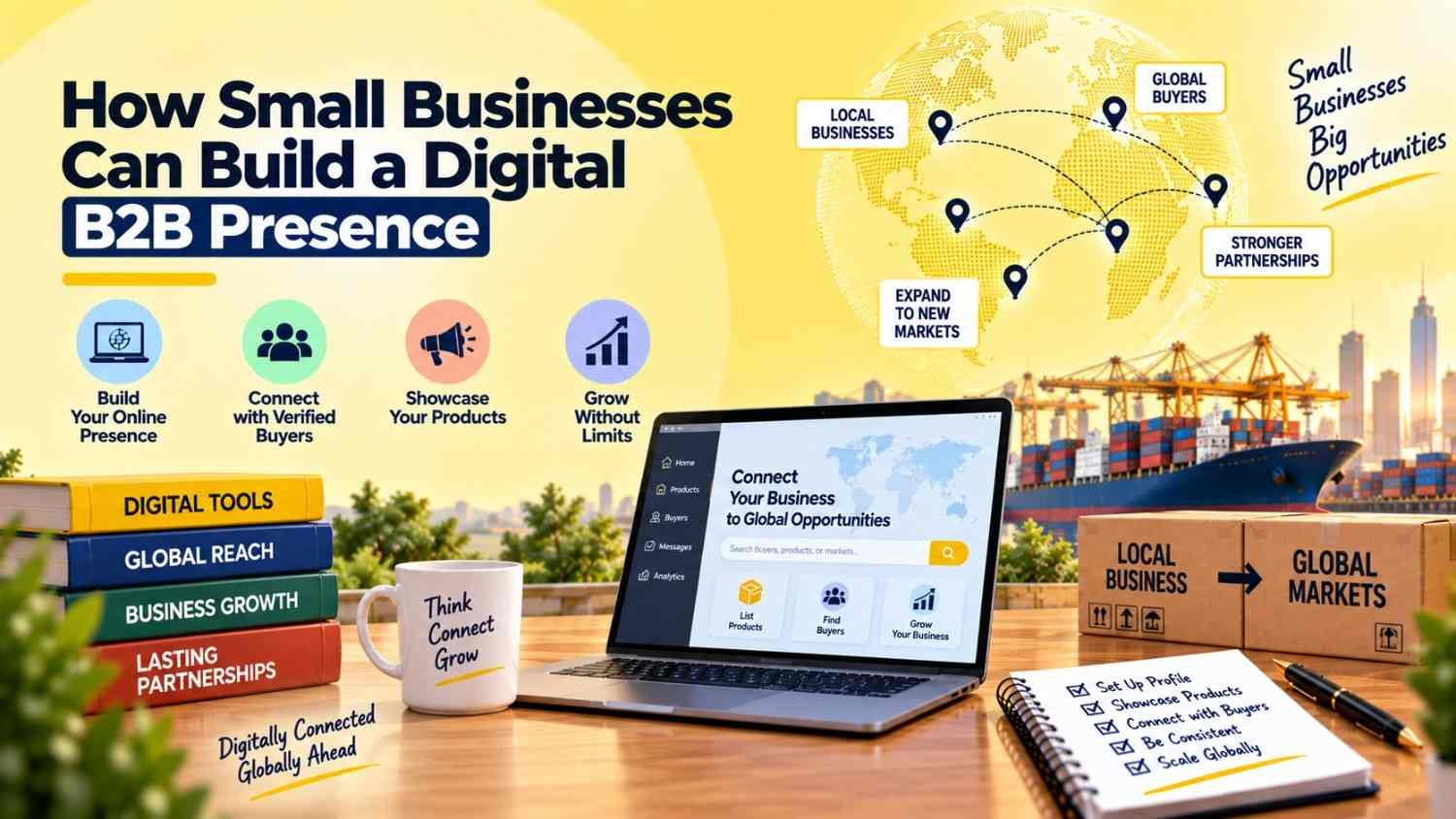
A practical guide for small businesses creating their first professional online B2B presence.
Why This Topic Matters
How Small Businesses Can Build a Digital B2B Presence is part of building a more structured B2B workflow. Businesses benefit when company information, product details, commercial terms and compliance responsibilities are documented clearly.
Build the Foundation
Keep legal business details, product specifications, contact information and supporting documents organized. Use accurate descriptions and avoid claims that cannot be verified.
Buyer and Supplier Communication
Business discussions should cover quantity, specifications, pricing basis, lead time, payment terms, delivery responsibility and quality expectations. Important commercial terms should be confirmed in writing.
Use Digital Discovery Carefully
Online profiles and marketplaces can improve discovery, but they do not replace due diligence. TradesFolks can be used as one discovery channel alongside direct relationships, referrals, events and other suitable platforms.
Practical Checklist
- Define the exact buyer, supplier or market you are targeting before spending on promotion.
- Keep company details, product specifications, MOQ, lead time and commercial terms consistent across channels.
- Verify counterparties, certifications and transaction-specific requirements before payment or shipment.
- Track qualified inquiries, quotations, conversions and repeat orders instead of measuring visibility alone.
- Review regulations, scheme rules and platform pricing from current official sources whenever they can change.
How to Measure Results
For B2B growth, useful metrics include qualified inquiries, response time, quotation rate, order conversion, average order value, repeat business and customer-acquisition cost. A channel with fewer but more relevant inquiries may be more valuable than one generating a large volume of low-fit contacts.
Frequently Asked Questions
Is online visibility enough to generate B2B orders?
No. Visibility helps discovery, but buyers still evaluate product fit, price, capacity, documentation, communication, delivery capability and commercial risk before placing an order.
Should a business depend on one marketplace?
Usually it is safer to combine multiple channels such as a company website, direct outreach, referrals, exhibitions, buyer-seller meetings and suitable B2B platforms. The right mix depends on the product and target market.
Conclusion
Use this guide as a practical starting point and verify current regulatory or platform-specific requirements before making a commercial decision.