
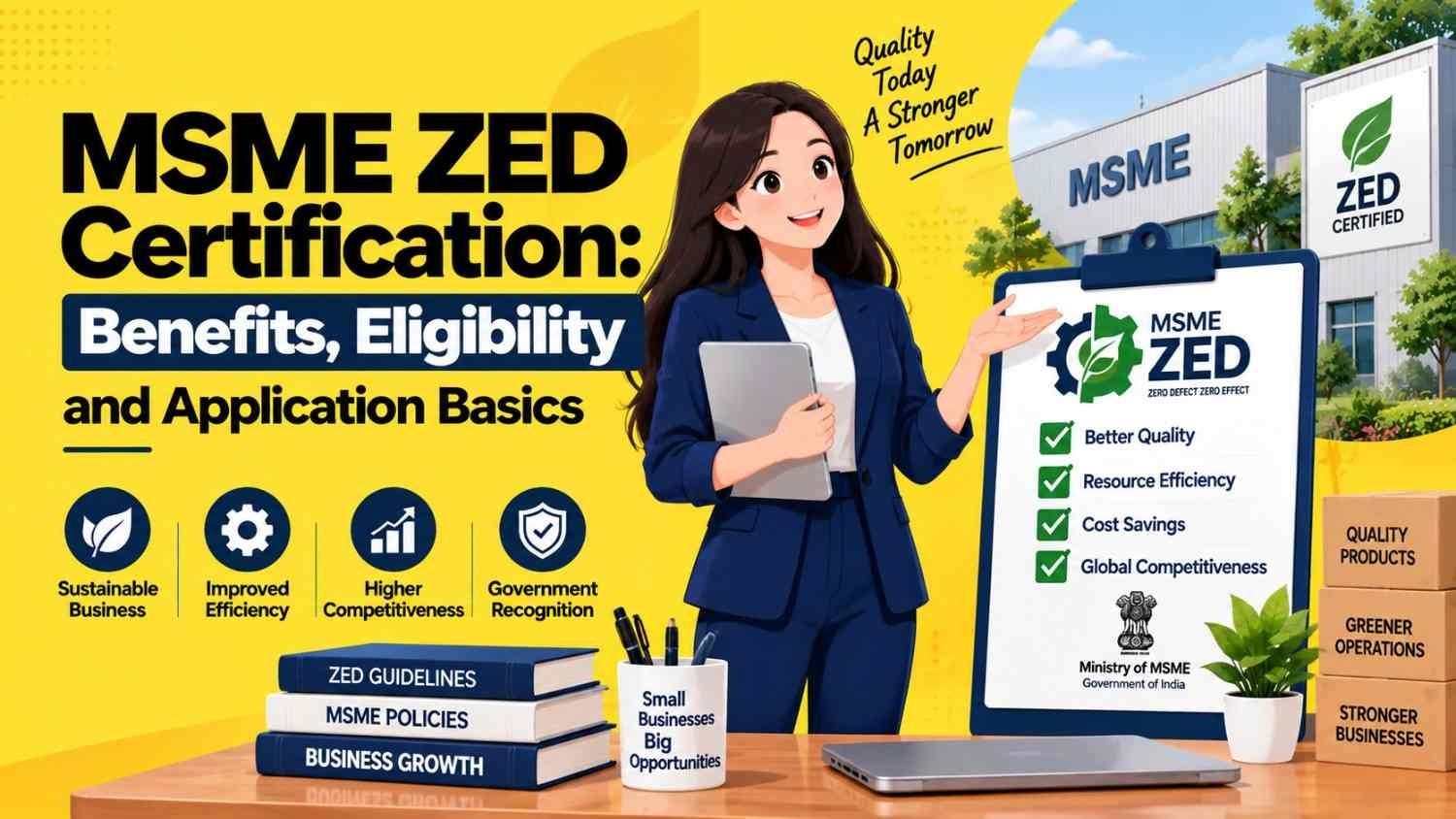
Understand the purpose of MSME ZED Certification, the business areas it addresses and what enterprises should verify before applying.
What Is ZED?
Zero Defect Zero Effect is associated with improving quality, productivity and environmentally responsible manufacturing among MSMEs. Businesses considering certification should review the latest official ZED and Ministry of MSME guidelines.
Why Quality Credentials Matter
B2B buyers frequently compare suppliers on more than price. Documented processes, consistent specifications, quality systems and credible certifications can make supplier evaluation easier.
Check Current Eligibility and Incentives
Certification levels, assessment requirements, financial support and eligibility conditions can be revised. Do not rely on an old blog or social post for the amount of a subsidy or reimbursement; confirm current details through official sources.
Prepare Before Applying
Organize business registration details, operating processes, quality records, safety practices and other documents requested by the current framework. Closing obvious process gaps before assessment can make the exercise more useful.
Show Relevant Credentials to Buyers
After obtaining a valid certification, present it accurately on your company profile and product materials. Avoid implying that a certification guarantees every future order or product unless the certification specifically establishes that claim.
Use TradesFolks for Supplier Discovery
Manufacturers can complement certifications with a structured supplier profile, product catalogue and inquiry process on TradesFolks. The goal is to help potential buyers understand capabilities before starting commercial discussions.
Conclusion
ZED can be considered as part of a wider quality-improvement strategy. Verify current requirements officially and connect quality improvements with better sales documentation and digital visibility.
Practical Checklist
- Define the exact buyer, supplier or market you are targeting before spending on promotion.
- Keep company details, product specifications, MOQ, lead time and commercial terms consistent across channels.
- Verify counterparties, certifications and transaction-specific requirements before payment or shipment.
- Track qualified inquiries, quotations, conversions and repeat orders instead of measuring visibility alone.
- Review regulations, scheme rules and platform pricing from current official sources whenever they can change.
How to Measure Results
For B2B growth, useful metrics include qualified inquiries, response time, quotation rate, order conversion, average order value, repeat business and customer-acquisition cost. A channel with fewer but more relevant inquiries may be more valuable than one generating a large volume of low-fit contacts.
Frequently Asked Questions
Is online visibility enough to generate B2B orders?
No. Visibility helps discovery, but buyers still evaluate product fit, price, capacity, documentation, communication, delivery capability and commercial risk before placing an order.
Should a business depend on one marketplace?
Usually it is safer to combine multiple channels such as a company website, direct outreach, referrals, exhibitions, buyer-seller meetings and suitable B2B platforms. The right mix depends on the product and target market.