
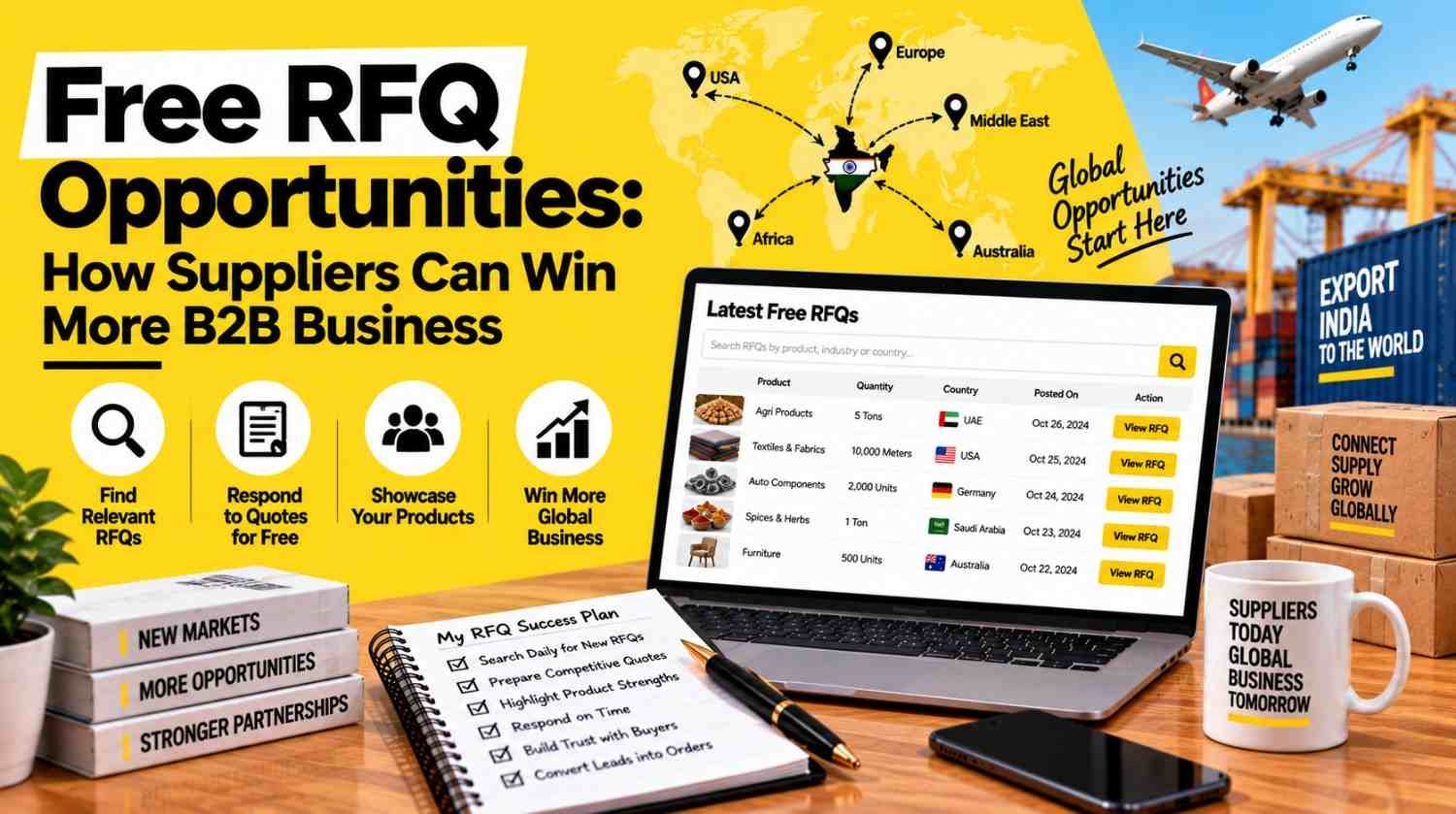
Learn how suppliers can evaluate RFQs, respond professionally and use no-cost RFQ access where available to pursue relevant B2B opportunities.
Why RFQs Matter in B2B
Many business purchases cannot be handled with a fixed retail price. Quantity, specification, customization, destination and payment terms can materially change the quotation.
Qualify Before You Quote
Check whether you can meet the product specification, quantity, delivery destination, timeline and required compliance. Declining a poor-fit RFQ can save time.
Prepare a Complete Response
Include product identification, specification, quantity, unit and total price basis, currency, Incoterm where relevant, MOQ, lead time, payment terms, packaging and quotation validity.
Ask Clarifying Questions
If a requirement is incomplete, ask targeted questions rather than making assumptions about materials, dimensions, standards or delivery.
Track RFQ Conversion
Measure RFQs reviewed, quotations submitted, negotiations started and orders won. This reveals whether a sourcing channel is producing commercially relevant demand.
Free RFQ Access Where Available
If TradesFolks currently allows suppliers to view or respond to specified RFQ opportunities without a charge, that can reduce the cost of testing the channel. Confirm current access rules and limits before advertising the feature as free.
Conclusion
RFQs are opportunities, not guaranteed orders. Win more of the right opportunities by qualifying carefully, responding completely and tracking conversion.
Practical Checklist
- Define the exact buyer, supplier or market you are targeting before spending on promotion.
- Keep company details, product specifications, MOQ, lead time and commercial terms consistent across channels.
- Verify counterparties, certifications and transaction-specific requirements before payment or shipment.
- Track qualified inquiries, quotations, conversions and repeat orders instead of measuring visibility alone.
- Review regulations, scheme rules and platform pricing from current official sources whenever they can change.
How to Measure Results
For B2B growth, useful metrics include qualified inquiries, response time, quotation rate, order conversion, average order value, repeat business and customer-acquisition cost. A channel with fewer but more relevant inquiries may be more valuable than one generating a large volume of low-fit contacts.
Frequently Asked Questions
Is online visibility enough to generate B2B orders?
No. Visibility helps discovery, but buyers still evaluate product fit, price, capacity, documentation, communication, delivery capability and commercial risk before placing an order.
Should a business depend on one marketplace?
Usually it is safer to combine multiple channels such as a company website, direct outreach, referrals, exhibitions, buyer-seller meetings and suitable B2B platforms. The right mix depends on the product and target market.
Related topic: free RFQ for suppliers should be evaluated in the context of the business, target market and current commercial requirements.