
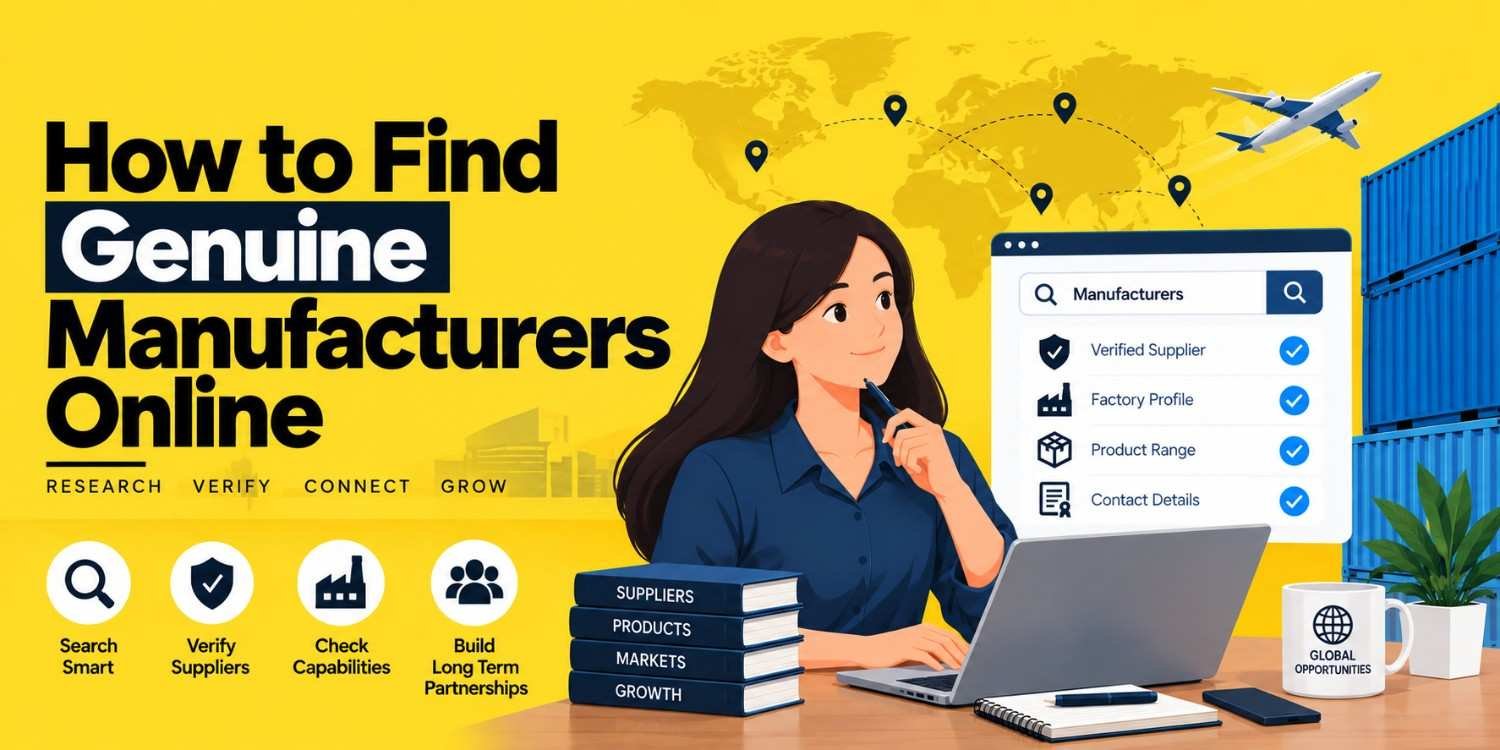
Finding manufacturers online is easy; determining whether a supplier genuinely manufactures the product requires more careful evaluation. Some buyers need a factory, while others may actually benefit from a capable trading company, so first define what matters to your sourcing model.
\r\nReview the Product Range
A manufacturer usually has a product range that reflects specific production processes and equipment. Extremely broad unrelated catalogues can be a reason to ask more questions.
\r\nAsk About Production Capability
Request information about machinery, production lines, capacity, materials, quality checks and customization processes.
\r\nCheck Business Information
Compare the legal entity, operating address, website, registration information and contact details for consistency.
\r\nRequest Factory Evidence
Current factory photographs, live video calls, audit reports or third-party inspections can provide additional evidence where appropriate.
\r\nTest Technical Knowledge
Ask detailed questions about materials, tolerances, tooling, production constraints and lead times. Genuine technical capability is usually visible in the quality of the answers.
\r\nUse Samples and Trial Orders
A sample confirms product capability more effectively than marketing claims. A trial order also tests communication, packaging and delivery.
\r\nConclusion
Online manufacturer discovery should be followed by structured verification. Evaluate business identity, production evidence, technical knowledge and actual product performance before scaling orders.
Practical Checklist
- Define the exact buyer, supplier or market you are targeting before spending on promotion.
- Keep company details, product specifications, MOQ, lead time and commercial terms consistent across channels.
- Verify counterparties, certifications and transaction-specific requirements before payment or shipment.
- Track qualified inquiries, quotations, conversions and repeat orders instead of measuring visibility alone.
- Review regulations, scheme rules and platform pricing from current official sources whenever they can change.
How to Measure Results
For B2B growth, useful metrics include qualified inquiries, response time, quotation rate, order conversion, average order value, repeat business and customer-acquisition cost. A channel with fewer but more relevant inquiries may be more valuable than one generating a large volume of low-fit contacts.
Frequently Asked Questions
Is online visibility enough to generate B2B orders?
No. Visibility helps discovery, but buyers still evaluate product fit, price, capacity, documentation, communication, delivery capability and commercial risk before placing an order.
Should a business depend on one marketplace?
Usually it is safer to combine multiple channels such as a company website, direct outreach, referrals, exhibitions, buyer-seller meetings and suitable B2B platforms. The right mix depends on the product and target market.
Related topic: find genuine manufacturers online should be evaluated in the context of the business, target market and current commercial requirements.