
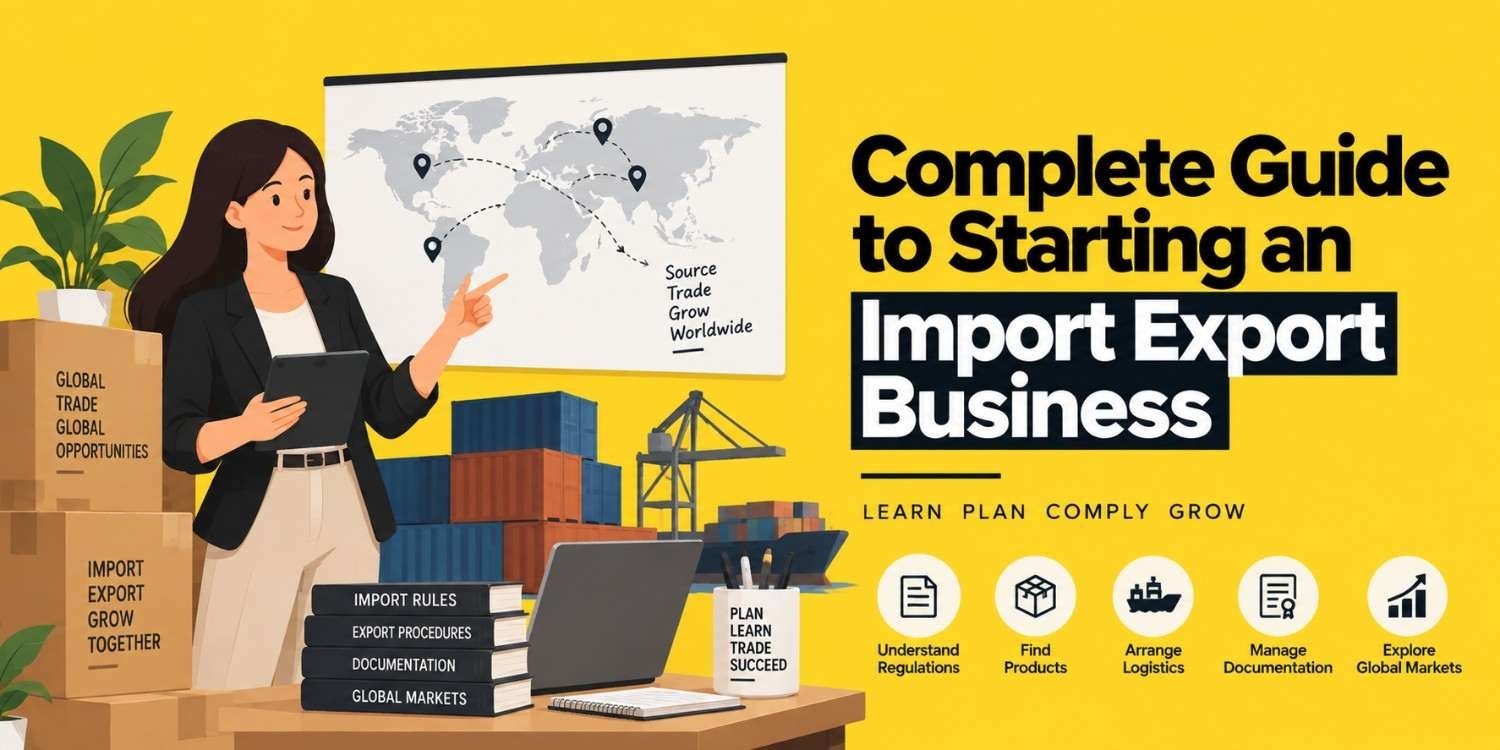
Starting an import-export business requires more than finding a product and a buyer. Sustainable international trade depends on product-market fit, supplier reliability, documentation, logistics, pricing and compliance.
\r\nChoose a Product and Target Market
Start with a category you understand or can research deeply. Compare demand, competition, margins, shipping complexity, regulations and customer expectations in potential destination markets.
\r\nSet Up the Business Legally
Register the business in the applicable jurisdiction and obtain the registrations, tax numbers, import-export permissions or licenses required for the products and countries involved. Requirements differ by country and product type.
\r\nFind and Evaluate Suppliers
Compare manufacturers and suppliers based on specifications, MOQ, pricing, quality systems, lead time, customization capability and export experience. Samples and controlled trial orders can reduce risk.
\r\nCalculate Landed Cost
Your actual cost may include product price, packaging, inland transport, inspection, freight, insurance, customs duties, taxes, handling and local delivery. Build these costs into pricing before accepting orders.
\r\nUnderstand Trade Terms
Agree clearly on Incoterms, payment terms, production milestones, responsibility for freight and insurance, documentation and claims. Commercial terms should be documented in purchase orders or contracts.
\r\nPlan Logistics and Documentation
Depending on the shipment, documents can include commercial invoices, packing lists, certificates of origin, transport documents, product certificates and customs declarations. Work with qualified freight and customs professionals where needed.
\r\nBuild a Buyer Acquisition Process
Create a professional company profile, product catalogue and clear quotation process. Respond quickly to inquiries and provide accurate specifications, pricing, MOQ and lead-time information.
\r\nManage Risk
Avoid sending or accepting funds without understanding the counterparty and transaction. Verify business details, use suitable payment structures, document specifications and consider inspection for higher-value orders.
\r\nConclusion
Import-export success comes from repeatable systems rather than one-off transactions. Build reliable supplier relationships, control your landed cost, document every agreement and expand market by market.
Practical Checklist
- Define the exact buyer, supplier or market you are targeting before spending on promotion.
- Keep company details, product specifications, MOQ, lead time and commercial terms consistent across channels.
- Verify counterparties, certifications and transaction-specific requirements before payment or shipment.
- Track qualified inquiries, quotations, conversions and repeat orders instead of measuring visibility alone.
- Review regulations, scheme rules and platform pricing from current official sources whenever they can change.
How to Measure Results
For B2B growth, useful metrics include qualified inquiries, response time, quotation rate, order conversion, average order value, repeat business and customer-acquisition cost. A channel with fewer but more relevant inquiries may be more valuable than one generating a large volume of low-fit contacts.
Frequently Asked Questions
Is online visibility enough to generate B2B orders?
No. Visibility helps discovery, but buyers still evaluate product fit, price, capacity, documentation, communication, delivery capability and commercial risk before placing an order.
Should a business depend on one marketplace?
Usually it is safer to combine multiple channels such as a company website, direct outreach, referrals, exhibitions, buyer-seller meetings and suitable B2B platforms. The right mix depends on the product and target market.
Export Readiness Checklist
- Confirm the product classification and destination-country requirements.
- Calculate landed or delivered economics using realistic freight, insurance, duties and handling assumptions.
- Prepare accurate product specifications, packing details, quotation terms and required trade documents.
- Agree Incoterms, payment terms, inspection expectations and responsibility for logistics in writing.
- Verify the buyer and use transaction-appropriate risk controls before dispatch.
Turning Visibility Into Export Business
Export visibility should lead to a disciplined qualification process. Ask about destination, quantity, specification, required certification, delivery schedule and preferred trade terms before issuing a final quotation. This reduces avoidable revisions and helps both sides determine whether the opportunity is commercially workable.
Related topic: start import export business should be evaluated in the context of the business, target market and current commercial requirements.